
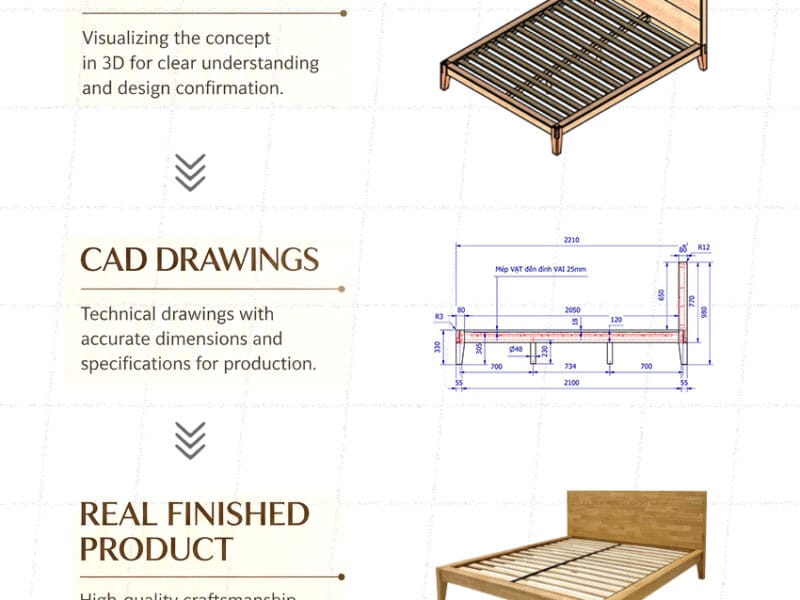
How to Develop a Furniture Product Without Complete Technical Drawings
You do not always need complete technical drawings to start developing a furniture product.
Furniture brands, importers, retailers, and designers may begin with only a reference photo, sketch, product concept, existing sample, or basic specification.
The real challenge is turning that initial idea into a product that can be manufactured consistently.
At IMITI, some OEM/ODM projects begin this way. Our furniture product development process can support customers from initial concepts through engineering, 3D design and rendering, CAD technical drawings, prototype development, and preparation for production.
This creates a structured path from product idea to production-ready furniture.
What Can You Start a Furniture Project With?
A furniture development project does not necessarily need to begin with a complete CAD package.
Depending on the project, customers can approach IMITI with:
- Product concepts
- Reference photos
- Hand sketches
- Existing samples
- Basic dimensions
- Product specifications
- Material or finish requirements
These references help establish the intended appearance and basic product requirements.
However, they are usually only the starting point.
Before the furniture can be manufactured, the concept needs to be translated into more detailed technical information.
Why a Reference Photo Is Not a Production Drawing
A reference image can show what a product should look like, but it normally does not explain exactly how the product should be manufactured.
Important details may still be missing, such as:
- Component dimensions and thicknesses
- Joinery
- Hardware positions
- Material specifications
- Structural support
- Assembly methods
- Knock-down construction
- Manufacturing tolerances
Consider a wooden bed frame as an example.
A reference photo may clearly show the headboard, legs, and overall proportions, but it may not show the bed rail connections, center support, slat system, hardware, or assembly method.
These details need to be defined before reliable manufacturing can begin.
From Our Factory Experience
One of the important lessons in furniture development is that a visually complete design is not necessarily production-ready.
The engineering stage helps close the gap between what the customer wants the product to look like and how the factory will actually manufacture it.
From Furniture Concept to Engineering
Once the product requirements are understood, the next stage is engineering review.
At IMITI, engineering and design support for applicable projects can include:
- 3D design and rendering
- CAD technical drawings
- Engineering review
- Structural optimization
- Prototype development
The objective is not to unnecessarily change the customer’s original design.
Instead, engineering helps determine how the intended design can be translated into practical furniture construction.
What Does the Engineering Team Review?
Depending on the product, this may include:
- Overall dimensions
- Component construction
- Material thickness
- Joinery
- Hardware
- Structural stability
- Assembly
- Production feasibility
Resolving these questions before physical sampling can help identify potential issues earlier and reduce unnecessary development time and repeated sampling.
3D Design and CAD Technical Drawings
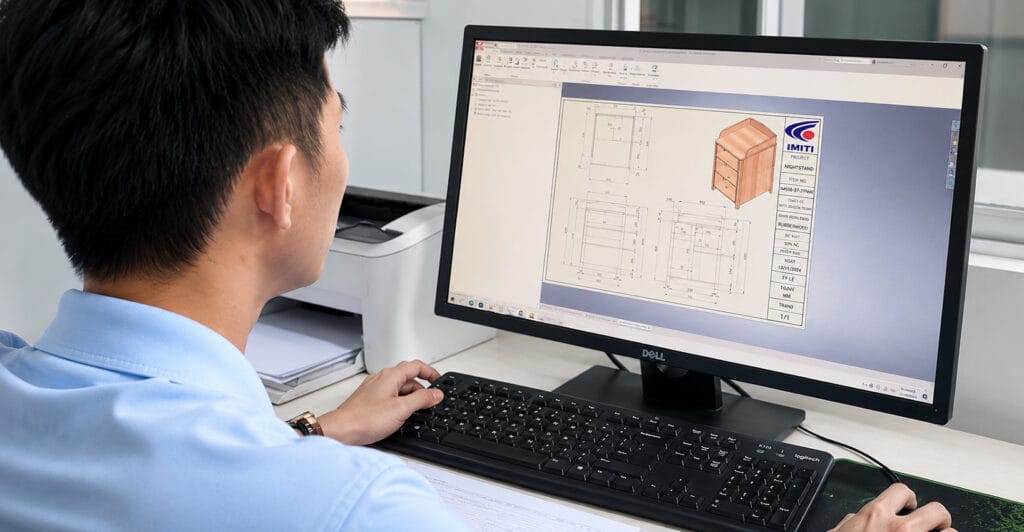
Once the initial engineering direction has been established, the product can be translated into 3D designs and CAD technical drawings.
These provide a clearer reference for both the customer and the manufacturing team.
3D Design and Rendering
3D visualization helps customers review the overall product before a physical sample is produced.
It can help confirm:
- Overall appearance
- Proportions
- Dimensions
- Design details
- Product configuration
This is particularly useful when the original project begins with only a photo or sketch.
CAD Technical Drawings
CAD drawings provide the more detailed information required for manufacturing.
Depending on the project, they may define:
- Product dimensions
- Component dimensions
- Construction details
- Joint locations
- Hardware positions
- Assembly relationships
Together, 3D design and CAD drawings create a more precise bridge between the initial concept and the physical prototype.
Material Selection Should Be Reviewed With the Design
Material is another important part of furniture product development.
IMITI works with materials including:
- Rubberwood
- Acacia
- Oak
- Ash
- Pine
- Natural rattan
- Metal
- Fabric
- Leather
- Other customer-specified materials
The appropriate material depends on the product design and individual project requirements.
Material should therefore not be selected only according to appearance.
Engineering may also need to consider how the material relates to:
- Product construction
- Joinery
- Finish
- Target positioning
- Manufacturing requirements
A Practical Development Principle
Changing a material can affect more than the appearance of the furniture.
For example, if a customer wants to adapt an existing wooden furniture design to another wood species, the construction may also need to be reviewed.
This is why material selection and engineering should be considered together, rather than as separate decisions.
From Technical Drawings to Furniture Prototype
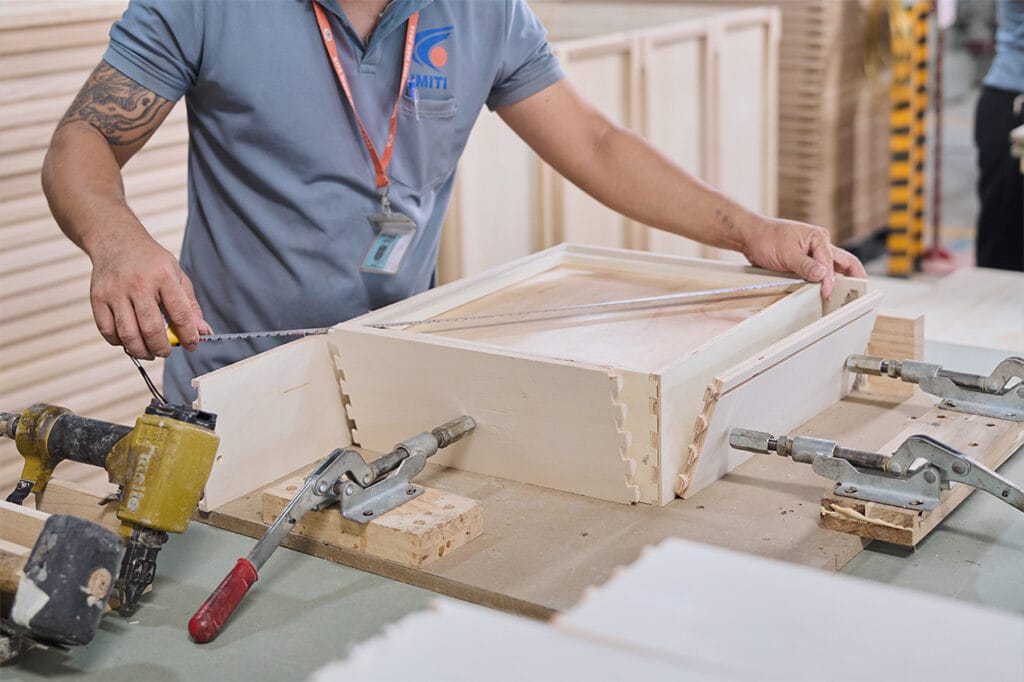
After the 3D design and technical drawings are reviewed and confirmed, the project can move to physical prototype development.
The prototype is an important stage because it turns the technical information into an actual piece of furniture.
It allows both the manufacturer and customer to evaluate aspects that cannot always be fully understood from drawings alone.
Depending on the product, the prototype may be reviewed for:
- Dimensions
- Structure
- Stability
- Joinery
- Hardware fitting
- Assembly
- Surface details
- Finish
- Overall appearance
What We Often Learn During Prototype Development
A first prototype should not only answer:
“Does the product look right?”
It should also help answer:
“Does the product work as intended?”
During prototype development, engineering or manufacturing teams may identify opportunities to:
- Improve structural details
- Adjust component dimensions
- Refine joinery
- Reposition hardware
- Simplify assembly
- Improve product stability
This is why prototype development should be viewed as part of the engineering process rather than simply an appearance approval stage.
Changes made at this point are generally easier to manage than changes made after mass production has started.
Testing and Inspection Before Mass Production
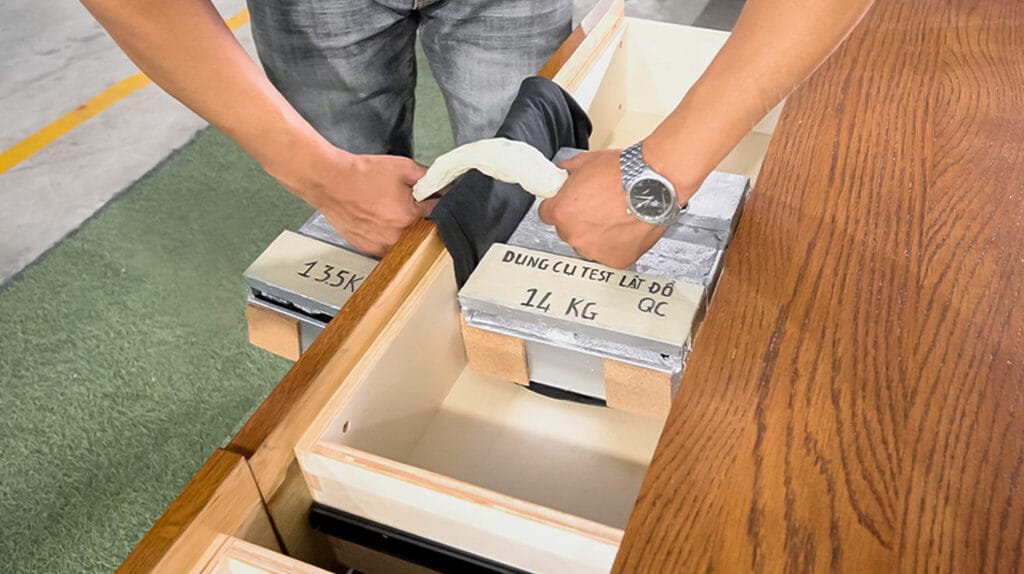
For applicable products and projects, prototypes can undergo durability and structural testing before mass production.
Inspection can also help verify whether the physical product matches the agreed design requirements.
Depending on the project, this may involve checking:
- Product dimensions
- Structural stability
- Assembly
- Hardware fitting
- Surface quality
- Finish
- Overall function
If an issue is identified, the product can be reviewed before moving toward mass production.
This creates another important checkpoint between product development and manufacturing.
Why Updated Technical Documentation Matters
Product development rarely ends with the first drawing.
A prototype may reveal that a component needs adjustment, a hardware position needs to change, or a structural detail needs improvement.
When this happens, the relevant technical information should also be updated.
Otherwise, the physical sample and technical documentation may no longer represent the same product.
From Our Factory Experience
This becomes especially important for repeat production.
An approved physical sample is valuable, but production should not depend entirely on someone’s memory of that sample.
Clear technical drawings and controlled product information help engineering, manufacturing, QC, and the customer work from the same approved specifications.
As a product expands into additional sizes, finishes, or related SKUs, this documentation becomes even more valuable.
IMITI’s Furniture Product Development Workflow
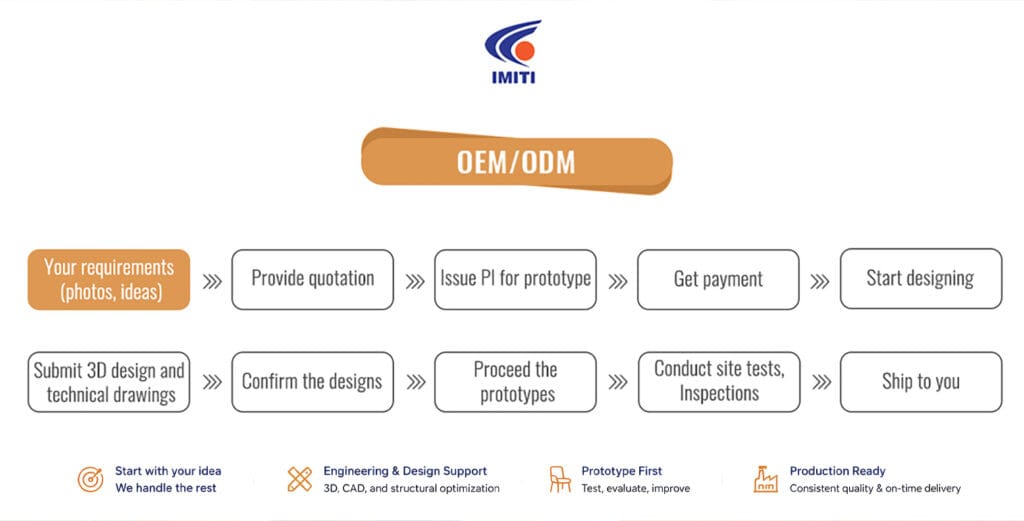
For projects that begin without complete technical drawings, IMITI follows a structured development process that helps move an initial concept toward a physical prototype.
1. Project Requirements & Quotation
Customers can begin by sharing available information such as product ideas, reference photos, sketches, dimensions, or specifications.
IMITI reviews the project requirements and provides a quotation. Once the development direction is agreed, a Proforma Invoice (PI) is issued for prototype development.
2. Product Design & Engineering
After the required payment is received, our engineering team begins developing the product.
Depending on the project, this stage can include:
- 3D design and rendering
- CAD technical drawings
- Engineering review
- Structural development
3. Design Review & Confirmation
The customer reviews the 3D design and technical drawings before the physical prototype is made.
Any necessary adjustments can be discussed and updated at this stage.
4. Prototype Development & Inspection
Once the design is confirmed, IMITI proceeds with the physical prototype.
Applicable testing and inspection can then be carried out to evaluate the product’s dimensions, construction, stability, assembly, and overall quality.
5. Prototype Shipment
After the prototype is completed and reviewed, it is shipped to the customer for evaluation.
This structured process helps buyers move from an initial photo, sketch, or furniture idea to a clearer and more manufacturable product without requiring complete technical drawings at the beginning.
What Should Buyers Prepare Before Starting?
Although complete technical drawings are not always necessary, providing useful project information can make the development process more efficient.
Before contacting a furniture manufacturer, consider preparing:
- Reference photos or sketches
- Approximate dimensions
- Intended product function
- Preferred materials
- Target finish
- Assembly requirements
- Target market
- Estimated order quantity
- Packaging requirements, if available
Not every detail needs to be finalized.
The objective is to provide enough information for the manufacturer to understand the product direction and identify what still needs to be developed.
How to Choose a Furniture Product Development Partner
When technical drawings are incomplete, engineering capability becomes more important.
Before choosing a manufacturer, buyers should consider asking:
- Can you develop furniture from concepts, sketches, or reference photos?
- Do you provide 3D design or rendering?
- Can you prepare CAD technical drawings?
- Do you provide engineering review?
- Can you optimize product structure where necessary?
- Can you develop physical prototypes?
- Can prototypes be tested before mass production?
- How are design changes transferred into production specifications?
These questions help determine whether the supplier is only a production factory or can also support the furniture product development process.
Furniture Product Development at IMITI
IMITI is a Vietnam-based wooden furniture manufacturer supporting OEM/ODM projects for furniture brands, wholesalers, retailers, and importers.
Customers do not necessarily need complete technical drawings to start a project.
For applicable projects, IMITI can support development from concepts, sketches, reference photos, or specifications through:
3D Design & Rendering → CAD Technical Drawings → Engineering Review → Structural Optimization → Prototype Development → Production-Ready Solutions
IMITI’s manufacturing experience includes bedroom furniture, solid wood bed frames, Japanese joinery beds, nightstands, dressers, bedroom sets, and other custom wooden furniture.
The goal is not simply to reproduce a reference image.
It is to help transform the initial idea into a product with clearer technical information that can move toward reliable manufacturing.
Conclusion: You Don’t Need Complete Technical Drawings to Start
A furniture idea does not need to arrive at the factory as a finished CAD package.
A concept, sketch, reference photo, or basic specification can provide the starting point.
What matters is having a structured process that transforms that information into something the factory can manufacture.
Concept → Engineering → 3D Design → CAD Technical Drawings → Prototype → Testing → Production
For furniture brands and importers developing new products, choosing a manufacturer with both engineering and manufacturing capability can help bridge the gap between an initial idea and production-ready furniture.
Related Guide
Learn more about what buyers should evaluate when selecting an OEM furniture manufacturer, including engineering, materials, prototyping, quality control, packaging, and production capability.
Have a Furniture Idea but No Complete Technical Drawings?
IMITI can review your product concept, reference photo, sketch, or available specifications and determine the appropriate next steps for development.
Discuss Your Furniture Development Project
Email: [email protected]
WhatsApp: +84909567520
Recent Comments