

China vs. Vietnam for Pet Furniture Manufacturing: What Buyers Should Know
China has long been an important sourcing destination for pet products. Its extensive manufacturing network, established supply chains, and broad product capabilities make it a practical choice for many international pet brands.
However, as brands review their sourcing strategies, Vietnam is becoming an alternative worth evaluating, particularly for wooden pet furniture.
The key difference is specialization. China offers a broad manufacturing ecosystem covering many pet product categories, while Vietnam has an established export furniture industry that may be well suited to selected wooden pet furniture products.
For buyers sourcing wooden dog crates, pet beds, cat houses, or litter box enclosures, the decision should go beyond factory prices. Materials, product development capabilities, construction methods, quality control, logistics, and long-term supply chain strategy all matter.
This guide compares pet furniture manufacturing in China and Vietnam to help brands, importers, and sourcing teams make informed decisions.
China vs. Vietnam for Pet Furniture Manufacturing: Quick Comparison
Is Vietnam a better alternative to China for pet furniture manufacturing?
Not necessarily for every product. Vietnam may be a strong sourcing option for furniture-style wooden pet products, while China can offer advantages for products requiring a broad network of specialized components, plastics, textiles, or electronics.
The right choice depends on your product design, materials, order volume, target market, and manufacturing requirements.
| Sourcing factor | China | Vietnam |
|---|---|---|
| Manufacturing ecosystem | Extensive and diversified across pet product categories | Established furniture manufacturing industry, with capabilities varying by factory |
| Wooden furniture production | Strong woodworking and furniture production capabilities | Strong export-oriented furniture manufacturing base |
| Plastic and electronic pet products | Broad specialized supply chain | Capabilities vary; some components may require imported sourcing |
| Solid wood pet furniture | Available through suitable manufacturers | Potentially attractive through furniture-oriented manufacturers |
| OEM/ODM development | Broad range of specialized suppliers | Available from selected furniture manufacturers with relevant technical capabilities |
| Manufacturing costs | Depend on region, factory, materials, and production scale | Depend on region, factory, materials, and production scale |
| MOQ and lead time | Supplier- and product-specific | Supplier- and product-specific |
| Export experience | Established global export infrastructure | Established export infrastructure, especially for wooden furniture |
| Supply chain diversification | Existing primary sourcing base for many brands | Potential additional sourcing location under a China+1 strategy |
This comparison describes general industry characteristics, not guaranteed capabilities or performance of individual manufacturers.
1. Why China Remains a Major Pet Furniture Manufacturing Hub
China continues to play an important role in the global pet products supply chain.
For buyers, its appeal extends beyond manufacturing capacity. The country offers access to suppliers specializing in different materials, components, and production processes.
A single pet product may involve several manufacturing disciplines, such as woodworking, metal fabrication, injection molding, textiles, and electronic assembly.
China’s established supplier networks can be particularly useful when these processes need to be coordinated.
A broad range of pet product categories
Chinese manufacturers serve numerous product categories, including:
- Dog crates and pet enclosures
- Cat trees and scratching furniture
- Pet beds and cushions
- Plastic pet houses and carriers
- Feeding accessories
- Electronic pet products
- Wooden and multifunctional pet furniture
For brands sourcing several different product categories, access to a diversified supplier ecosystem can simplify product development and procurement.
Established production and component networks
Some pet furniture designs require more than woodworking.
For example, a dog crate may combine wooden panels, metal bars, hinges, locks, and protective packaging. An electronic pet product may also require motors, sensors, and circuit boards.
Manufacturers operating within established component networks may have advantages when sourcing these specialized parts.
This is one reason why moving production away from an existing supplier is not always straightforward.
Why buyers may still consider additional sourcing locations
Even when an existing Chinese supplier performs well, brands may want to reduce their dependence on a single country.
A 2025 industry survey published by PETS International found that 75% of responding pet companies importing from China expected the country to remain an important sourcing market. At the same time, some respondents reported plans to seek more local or geographically closer suppliers.
These findings suggest that sourcing diversification does not necessarily mean abandoning China.
For many brands, it means keeping their existing suppliers while evaluating additional manufacturing options.
2. Why Vietnam Is Worth Considering for Wooden Pet Furniture
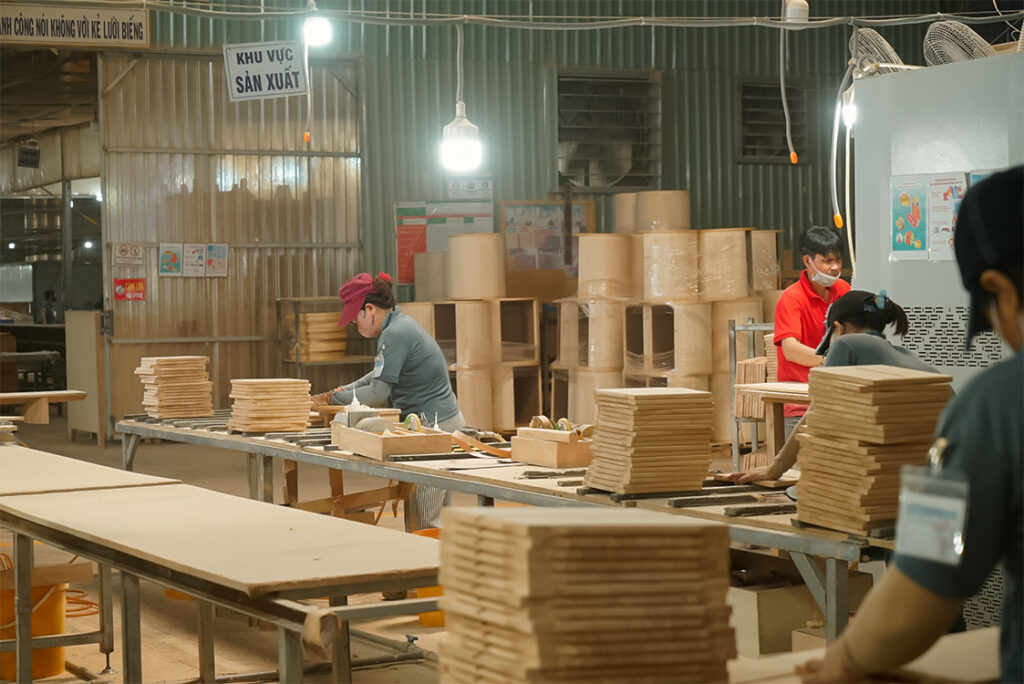
Vietnam’s strongest advantage in this comparison is not its ability to manufacture every pet product category.
It is the country’s established experience in wooden furniture production.
According to Vietnam’s wood industry export data, exports of wood and wooden products reached approximately US$17.2 billion in 2025. The United States remained the largest destination, accounting for around 55% of the export value.
These figures demonstrate the scale of Vietnam’s export-oriented wood manufacturing industry.
They do not, however, measure Vietnam’s wooden pet furniture exports specifically.
Experience in furniture manufacturing
Wooden pet furniture shares several manufacturing requirements with conventional home furniture.
Examples include:
- Solid wood and engineered wood processing
- CNC machining and component preparation
- Joinery and structural assembly
- Surface sanding and finishing
- Hardware installation
- Knock-down construction
- Export packaging
These capabilities can be relevant to products designed to serve both pets and their owners.
For example, a wooden dog crate that doubles as a side table requires furniture-style construction as well as appropriate ventilation, safe openings, and pet-specific functionality.
A manufacturer experienced in conventional furniture may therefore be worth evaluating for this category.
However, furniture experience alone does not guarantee expertise in pet safety or product-specific requirements.
Opportunities for furniture-style pet products
Vietnam may be particularly relevant to brands developing products such as:
Wooden dog crate furniture: Pet enclosures designed to integrate with living room or bedroom interiors.
Wooden dog beds: Bed frames with furniture-style finishes and removable cushions.
Litter box enclosure cabinets: Cabinets designed to conceal litter trays while maintaining access and ventilation.
Wooden cat houses: Furniture-oriented resting and hiding spaces.
Multifunctional pet furniture: Products combining pet accommodation with shelving, storage, or side-table functions.
The commercial feasibility of each product still depends on the manufacturer’s equipment, engineering capabilities, materials, and production capacity.
3. Manufacturing Costs: Is Vietnam Cheaper Than China?
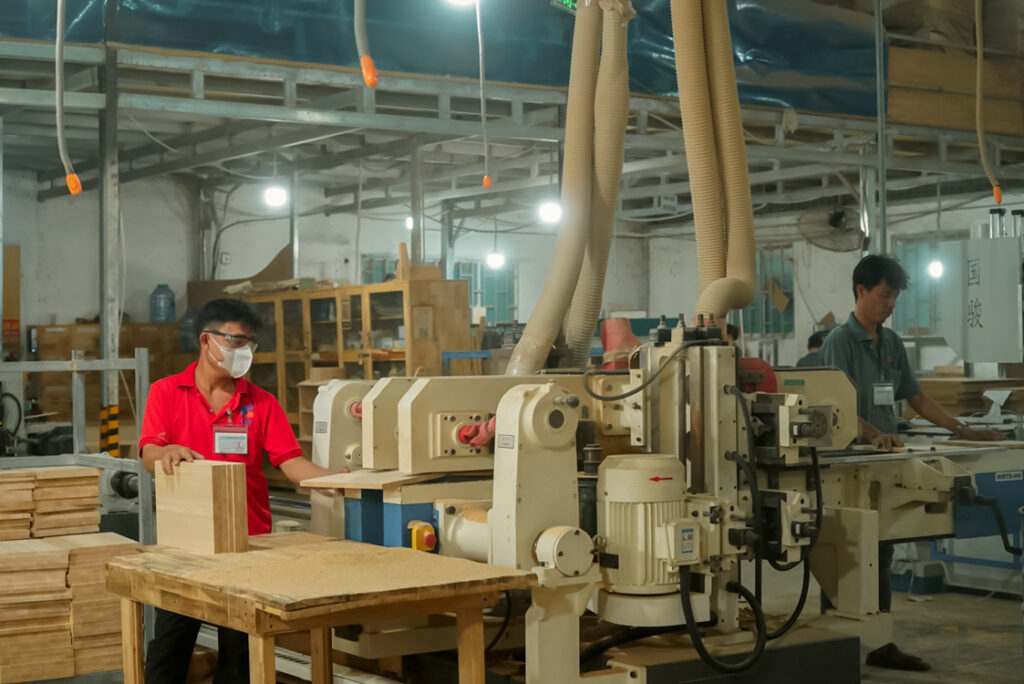
Cost is often one of the first questions buyers ask when comparing pet furniture manufacturing in China and Vietnam.
However, Vietnam is not automatically cheaper than China.
A lower initial factory quotation does not necessarily result in a lower total sourcing cost.
What determines the cost of wooden pet furniture?
For wooden pet furniture, major cost drivers can include:
- Wood species and material grade
- Solid wood versus engineered wood construction
- Product dimensions and material consumption
- Joinery and structural complexity
- Hardware and accessories
- Finishing requirements
- Labor and production processes
- Order quantity
- Packaging specifications
- Quality control and testing requirements
Consider a wooden dog crate designed as a living room side table.
Its production cost may vary substantially depending on whether it uses solid oak, rubberwood, plywood, or MDF.
The choice between fully assembled and knock-down construction can also affect packaging, assembly requirements, and freight efficiency.
Compare total landed cost, not just FOB price
When evaluating suppliers, buyers should compare the full cost of bringing a product to market.
| Cost component | What buyers should evaluate |
|---|---|
| Product price | Comparable FOB quotations based on identical specifications |
| Sampling and development | Prototype fees, revisions, engineering requirements |
| Packaging | Carton materials, protection, dimensions, assembly instructions |
| Freight | Shipping volume, loading efficiency, destination costs |
| Import duties | Product classification, origin, destination, applicable measures |
| Quality costs | Inspection, testing, defects, replacement parts |
| Inventory | Production lead time, shipping time, reorder planning |
A manufacturer with a slightly higher FOB price may still offer a competitive overall solution if the product design, packaging, quality consistency, and delivery performance meet the buyer’s requirements.
Conversely, an attractive quotation may become less competitive if the project requires extensive redesign or additional component sourcing.
Practical sourcing tip: Request quotations from Chinese and Vietnamese suppliers using the same technical drawings, materials, finishing standards, packaging requirements, and estimated order quantities.
Without comparable specifications, price differences can be misleading.
4. Materials and Manufacturing Capabilities
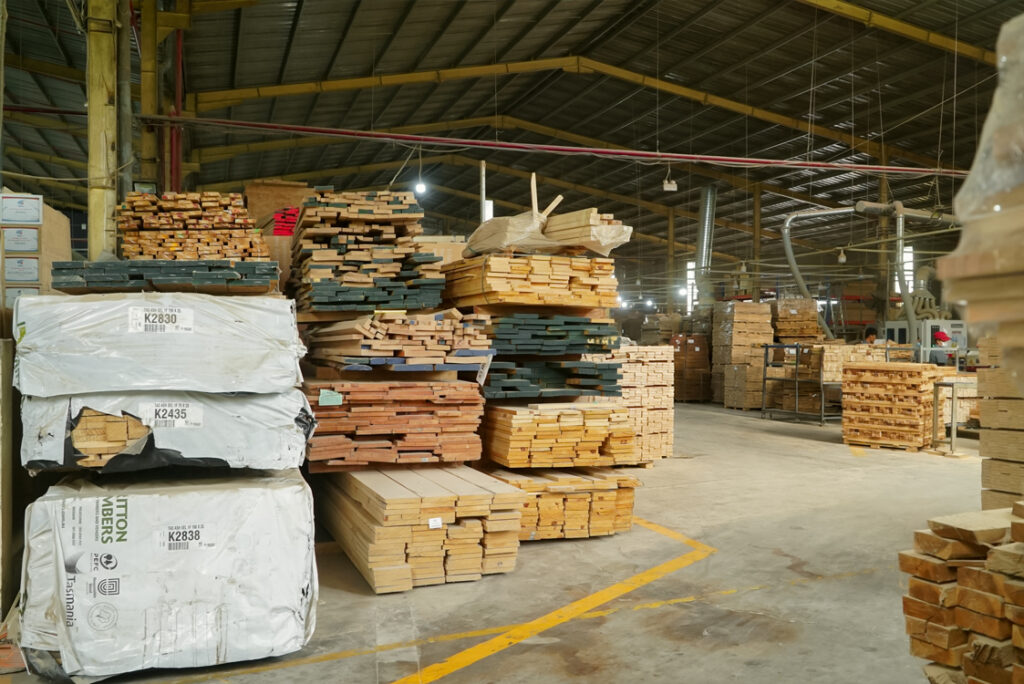
Material selection is particularly important when comparing wooden pet furniture suppliers.
Not all manufacturers specialize in the same materials or construction methods.
Solid wood
Solid wood can be suitable for products positioned around natural appearance and furniture-style aesthetics.
Potential applications include wooden dog bed frames, side-table-style dog crates, and selected structural components.
Buyers should evaluate wood species, dimensional stability, finishing, structural design, and cost.
Plywood
Plywood can provide a practical solution for panel-based construction.
It may be used in cabinets, enclosure panels, and certain knock-down products, depending on the required grade and design.
Important considerations include veneer quality, edge finishing, adhesives, and moisture exposure.
MDF
MDF can be suitable for some painted furniture-style products, particularly where smooth panel surfaces are required.
However, moisture exposure, edge durability, weight, and the intended use environment must be considered.
Metal and mixed-material components
Many pet furniture products combine wood with metal components.
Examples include bars, hinges, locks, handles, and fasteners.
Buyers should confirm whether these components are manufactured in-house, purchased locally, or imported.
Component sourcing can influence costs, lead times, consistency, and the feasibility of transferring an existing design to another factory.
5. OEM and ODM Pet Furniture Manufacturing
For brands developing their own product collections, OEM and ODM capabilities can be as important as production capacity.
OEM manufacturing
Under an OEM arrangement, the buyer typically supplies an existing product design, technical drawings, specifications, or an approved sample.
The manufacturer evaluates feasibility and produces the product according to agreed requirements.
OEM may be appropriate when a brand already has a developed product and wants to evaluate additional manufacturing locations.
ODM manufacturing
ODM involves greater participation from the manufacturing partner during product development.
Depending on the supplier, this may include:
- Material recommendations
- Construction development
- Design refinement
- Prototype production
- Knock-down engineering
- Manufacturing feasibility assessment
ODM can be useful for pet brands entering furniture-oriented categories without extensive in-house woodworking expertise.
What should buyers verify?
Before choosing an OEM/ODM supplier, ask:
- Can the factory work from drawings, reference samples, or initial concepts?
- Which materials and construction methods can it support?
- Can it develop prototypes and document revisions?
- How are product specifications and design ownership managed?
- What quality and testing requirements can it support?
- How are packaging and assembly requirements developed?
These questions help determine whether a supplier is suitable for the project, regardless of its location.
6. Lead Times, MOQ, and Production Flexibility
Buyers sometimes assume that one manufacturing country always offers shorter lead times or lower minimum order quantities.
In practice, both depend heavily on the supplier and the product.
For wooden pet furniture, lead time can be influenced by:
- Availability of wood and engineered panels
- Hardware sourcing
- Sample approval
- Production scheduling
- Finishing requirements
- Packaging preparation
- Quality inspections
Similarly, MOQ may depend on material purchasing requirements, finishing batches, component quantities, and production efficiency.
Questions to ask before transferring production
When evaluating a new factory, request information on:
- Sample development timeline
- Initial production lead time
- Repeat-order lead time
- MOQ per model and finish
- Component sourcing arrangements
- Capacity planning
- Quality approval procedures
For a new supplier, the first order may require more development and coordination than subsequent orders.
Brands should account for this learning period when planning a sourcing transition.
7. Tariffs, Country of Origin, and Compliance
Import duties and trade regulations can influence sourcing decisions, particularly for brands selling in the United States.
However, buyers should not assume that all pet furniture imported from Vietnam receives more favorable tariff treatment than products imported from China.
The applicable treatment depends on the product’s tariff classification, origin, destination market, and trade measures in effect when the goods enter the country.
Why product classification matters
A wooden dog crate, a pet bed, and a furniture-style cabinet may have different classification considerations depending on their design and intended function.
Importers should verify the applicable Harmonized System classification rather than assuming that every wooden pet product falls under the same furniture category.
Why country of origin matters
Moving final assembly to Vietnam does not automatically establish Vietnamese origin.
For goods incorporating components from multiple countries, origin may depend on the manufacturing processes performed and the applicable legal rules.
Importers should consult customs specialists and, where appropriate, request an advance ruling from the relevant customs authority.
Product safety and material compliance
Brands should also assess:
- Product stability and structural performance
- Ventilation and safe openings
- Hardware and edge safety
- Coatings and chemical restrictions
- Wood legality and traceability
- Packaging and labeling requirements
- Applicable destination-market regulations
Requirements vary by product and market. They should be confirmed before production rather than assumed from the manufacturing country.
8. China+1: A Practical Sourcing Strategy for Pet Furniture Brands
For many brands, the most practical approach may not be a complete switch from China to Vietnam.
Instead, it may be a China+1 sourcing strategy.
Under this approach, a company maintains existing suppliers while developing an additional manufacturing source in another country.
When China+1 may make sense
A pet brand may consider this strategy when it wants to:
- Reduce dependence on one sourcing country
- Develop a secondary supplier for selected products
- Expand into wooden furniture-style categories
- Compare manufacturing capabilities across countries
- Improve long-term sourcing flexibility
However, managing multiple suppliers also introduces additional work.
Brands may need to coordinate technical specifications, sample approvals, quality expectations, packaging consistency, and inventory planning across different factories.
Start with a suitable product category
Rather than transferring an entire collection immediately, buyers can begin with a product that matches the prospective supplier’s capabilities.
For example, a brand already sourcing textile pet beds and plastic accessories from China might explore Vietnam for a new wooden dog crate or litter box enclosure collection.
This allows the brand to evaluate the new supplier without disrupting established product lines.
9. Which Pet Furniture Products Should Buyers Consider Sourcing from Vietnam?
For brands evaluating Vietnam, furniture-oriented wooden products may be a practical starting point.
| Product category | Why it may be suitable | What to verify |
|---|---|---|
| Wooden dog crate furniture | Combines furniture construction with pet enclosure functionality | Structural stability, ventilation, hardware, pet safety |
| Wooden dog beds | Furniture-style frame construction | Joint strength, weight capacity, cleaning, finishes |
| Litter box enclosure cabinets | Panel processing and cabinet construction | Moisture protection, ventilation, access, cleaning |
| Wooden cat houses | Woodworking and enclosure construction | Stability, safe openings, edge details |
| Multifunctional pet furniture | Furniture design and assembly requirements | Functionality, KD feasibility, structural performance |
This is not a claim that Vietnamese manufacturers are inherently better at these products.
It is a recommendation to match product categories with relevant furniture manufacturing capabilities.
10. How to Evaluate a Vietnamese Pet Furniture Manufacturer
Before selecting a supplier, buyers should conduct a structured evaluation.
Manufacturing capability
Confirm that the factory can process the required materials and manufacture the intended construction.
Product development
Review its ability to support technical drawings, prototypes, revisions, and production specifications.
Quality management
Ask how incoming materials, in-process production, final inspection, and corrective actions are managed.
Pet-specific requirements
Confirm how the supplier will address stability, ventilation, accessible edges, openings, and intended animal use.
Commercial requirements
Clarify MOQ, pricing assumptions, payment terms, sample fees, and production timelines.
Export readiness
Evaluate packaging, shipment preparation, documentation, and communication processes.
The goal is to identify a manufacturing partner whose capabilities match the product and commercial requirements, not simply the lowest quoted price.
11. Exploring Wooden Pet Furniture Manufacturing with IMITI
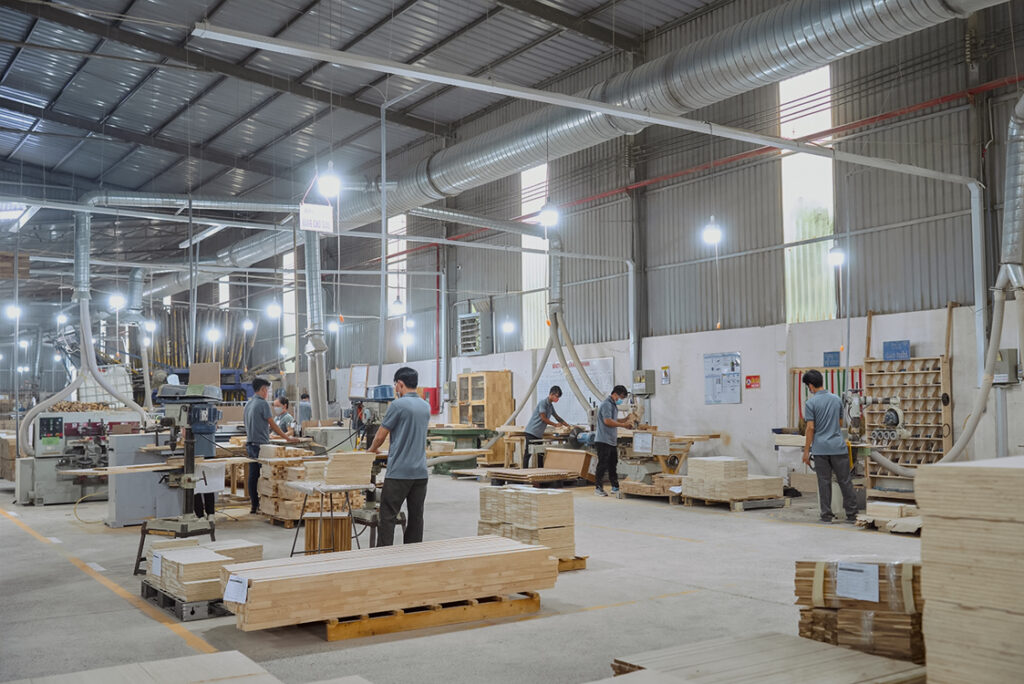
For pet brands and furniture importers considering Vietnam, a furniture-oriented manufacturing partner can be worth evaluating.
IMITI is a Vietnam-based furniture manufacturer exploring OEM/ODM opportunities in wooden pet furniture.
Our focus includes furniture-style product categories such as wooden dog crates, wooden pet beds, cat houses, and litter box enclosures.
We approach these products from a furniture manufacturing perspective, with attention to materials, construction feasibility, product design, and export-oriented requirements.
If your brand is evaluating a new wooden pet furniture collection or considering a China+1 sourcing strategy, explore our pet furniture manufacturing capabilities in Vietnam.
Frequently Asked Questions
Is Vietnam a good alternative to China for pet furniture manufacturing?
Vietnam can be a viable option for selected wooden pet furniture products, particularly when a supplier’s woodworking and furniture manufacturing capabilities match the design. China may remain advantageous for products requiring broader specialized component networks.
Is pet furniture manufacturing cheaper in Vietnam than in China?
Not necessarily. Costs depend on materials, product construction, order quantity, components, factory efficiency, packaging, logistics, and applicable import duties. Buyers should compare equivalent specifications and total landed costs.
Can Vietnamese manufacturers produce wooden dog crate furniture?
Some Vietnamese furniture manufacturers may have the woodworking and cabinetmaking capabilities needed for wooden dog crate furniture. Buyers must verify pet-specific safety requirements, hardware, ventilation, and product development capabilities.
Can I move an existing pet furniture design from China to Vietnam?
Potentially. The new supplier must review the design, bill of materials, tooling, components, manufacturing processes, and quality requirements. Sampling and technical validation are normally needed before mass production.
Does Vietnam offer lower US import tariffs than China?
Not for every product or circumstance. Tariffs depend on classification, origin, and the trade measures in force at importation. Importers should verify the applicable rates with qualified customs professionals.
What is the best pet furniture category to source from Vietnam?
For buyers evaluating furniture-oriented suppliers, wooden dog crates, dog bed frames, litter box cabinets, and wooden cat houses may be useful starting points. Suitability depends on the individual factory.
Should pet brands completely replace their Chinese suppliers?
Not necessarily. A China+1 approach allows brands to retain existing suppliers while evaluating additional production sources for selected products.
Final Thoughts: China or Vietnam for Pet Furniture Manufacturing?
China and Vietnam offer different manufacturing strengths, and neither country is automatically the best choice for every pet furniture product.
China remains an important sourcing base for diverse pet products and specialized component supply chains.
Vietnam offers an established export furniture manufacturing industry that may create opportunities for brands developing wooden, furniture-style pet products.
For buyers, the most effective approach is to compare manufacturers based on product fit, technical capabilities, total landed cost, quality requirements, and long-term sourcing strategy.
The right question is not simply whether Vietnam is better than China. It is whether a Vietnamese manufacturer can offer a reliable, commercially viable solution for your specific pet furniture collection.
For brands exploring this possibility, learn more about IMITI’s wooden pet furniture manufacturing approach.
Recent Comments